Here is a stance I will defend in any procurement meeting: the most expensive inverter you can buy is the one you install without testing first. Not the premium model. Not the one with the longer warranty. The untested one.
I run procurement for a mid-size EPC—42 people, roughly $6.8 million in annual equipment spend, about $1.9 million of that on PV hardware. I have signed off on more than 60 inverter purchase orders over the past six years, and every single one of them went through the same incoming inspection routine. That discipline did not come from a textbook. It came from getting burned.
The shipment number that fools people
Sungrow moved over 130 GW of PV inverters in 2023 (publicly reported shipment figures, verified against their annual disclosures). That number is genuinely the reason they end up on our shortlist—scale implies supply-chain maturity, parts availability, and a service network that will still exist in year eight of a ten-year warranty. If you are buying a sungrow 10kw on-grid solar inverter for a commercial rooftop, the brand itself is not the risk.
Everything I had read before my first big Sungrow order said the same thing: tier-one brands are basically plug-and-play. In practice, fleet-level reliability tells you almost nothing about the specific pallet that shows up at your warehouse. Shipping damage happens. Firmware revisions ship out of sync with the commissioning manual. Accessory kits go missing. The 130 GW figure is a statistic about their whole installed base—it is not a promise about the carton in front of you.
It took me about four years and roughly 45 purchase orders to fully internalize that distinction. Big brand reduces your probability of a problem. It does nothing to reduce the cost per incident once that problem reaches a job site.
What skipping the check actually cost us
Q3 2024, a 480 kW commercial rooftop job. We took delivery of four 10 kW on-grid units as part of a mixed order (this was a phased build, so the small units went out first). The pallet looked fine—wrapping intact, no visible crush damage. We skipped the bench test because the crew was already on site and the schedule was tight. Saved ourselves maybe two hours of warehouse time. Call it $180 in labor, give or take.
Install day: two of the four units threw communication faults during commissioning. Turned out to be a firmware mismatch between the batch we received and the monitoring gateway already on the roof. Nothing was broken. The hardware was fine. But the fix required a technician visit, a firmware push, and a re-commissioning window that pushed our handover by four days.
Our own records put a single truck roll for an inverter swap or service call on a commercial rooftop at roughly $600–900 in labor and equipment, before you count lost generation or schedule penalties. Add the four-day delay on a contract with a liquidated-damages clause and the real number was closer to $2,400. Against a two-hour check we skipped.
The conventional wisdom says prevent problems at the source, and I agree with it in principle. What I did not expect was how often the “problem” is administrative rather than physical—wrong firmware, missing accessory, mismatched model revision. You cannot see any of that on a pallet. You can only catch it by powering the unit up on a bench before it leaves your dock.
The cheapest test in the whole workflow
Here is the part that still surprises people: the most useful tool in our incoming inspection is a $40 multimeter.
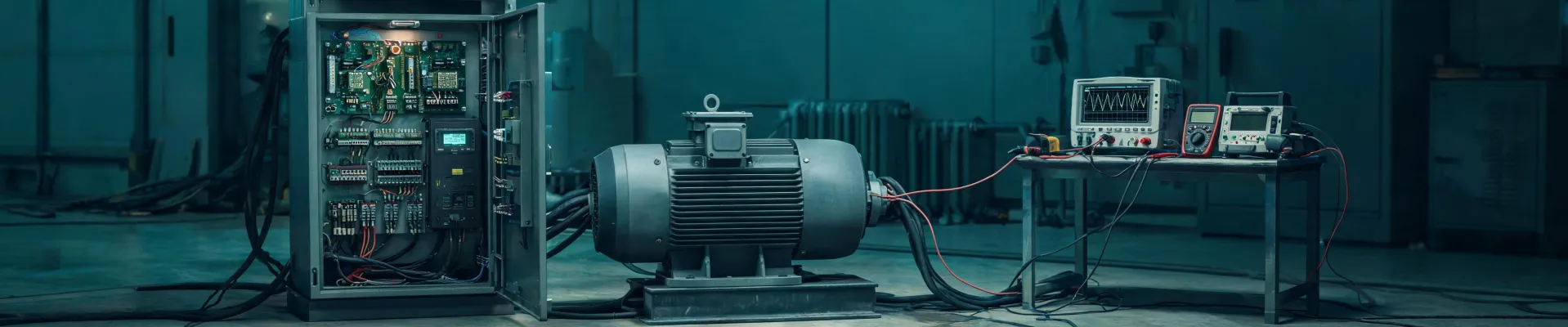
If you are not sure how to test power supply with multimeter basics, the short version for inverter intake is this—verify incoming AC voltage at the test bench, confirm the DC input terminals read within expected open-circuit range for your string configuration, and check insulation resistance before anything gets mounted. It takes about five minutes per unit. It catches dead-on-arrival units, reversed polarity from a miswired test rig, and grounding faults that would otherwise blow a fuse the moment the unit energizes.
We built the checklist after our third avoidable incident. It has 14 points now, and I estimate it has prevented somewhere around $8,000–9,000 in rework over the past two years—though I would have to pull the maintenance log to give you an exact figure, so treat that as a ballpark.
And this is where I have to correct myself on something. I used to think inspection discipline only mattered for the big-ticket items. It does not. We also buy genmax inverter generator units for backup power on remote sites, and small accessories like a type c battery charger for our field laptops and test equipment. Last spring a batch of chargers arrived with the wrong plug standard—EU instead of UK. Nobody checked, because it was a $12 item. Three crews showed up to a site with dead tablets. The delay cost more than a thousand times the price of the chargers.
The bottom line is that the size of the line item has nothing to do with the size of the consequence. A missing $12 charger can stop a $40,000 commissioning job just as effectively as a failed inverter.
“But the warranty covers it”
This is the objection I hear most, and it is a red flag every time. Yes, the warranty covers the hardware. It does not cover the truck roll to diagnose the fault. It does not cover the crew standing idle while you wait for an RMA. It does not cover the liquidated damages on a handover date you missed because a unit that should have been tested on your dock failed on someone else's roof.
Warranty is a reimbursement mechanism. Inspection is a prevention mechanism. They are not substitutes, and treating one as the other is how procurement teams end up with a low unit price and a terrible total cost of ownership.
The other pushback I get is schedule. “We do not have time to bench-test every unit.” I have heard it, and I have said it myself. But five minutes of verification beats five days of correction—that is not a slogan, it is arithmetic I have run on my own job logs.
Where this advice stops working
I can only speak to our situation: a mid-size EPC with a warehouse, a test bench, and a team that installs what we buy. If you are a one-off buyer putting a single 10 kW system on your own building, building a full intake protocol is probably overkill—do a visual inspection, confirm the serial numbers match your order, and have the installer energize and test before they leave. The calculus changes if you are not the one absorbing the rework cost.
And if you are buying at true utility scale, my 14-point checklist is probably too basic for you. That world has its own commissioning standards.
But for the middle of the market—the installers, the small EPCs, the commercial buyers moving 20 to 500 kW at a time—the principle holds. Shipment volume is not a quality guarantee. Warranty is not a prevention strategy. The cheapest insurance you will ever buy is the two hours you spend testing a unit on your own dock before it goes anywhere near a customer's roof.
Trust me on this one. I have the invoices to prove it.

Rebecca Sloan
Rebecca Sloan is a power distribution and protection analyst specializing in circuit breakers, switchgear, contactors, fuses, surge protective devices, and coordination. She applies IEC 60947-2 breaker requirements, IEC 60269 fuse characteristics, and IEC 61643-11 tests while examining rated voltage, breaking capacity, time-current curves, selectivity, and prospective short-circuit current. She helps engineers and buyers compare protective devices against documented fault levels, installation conditions, maintenance access, and continuity priorities.