The lowest bid on a Generac standby generator has cost us more money than any other procurement decision I've made in the past five years. Not because the machine failed—because everything around it did. The install crew without permits, the fuel line that didn't meet code, the control panel that needed reprogramming because nobody checked the amp gain settings before commissioning.
I'm a quality and brand compliance manager at an electrical equipment supplier. I review roughly 200 unique projects a year before they reach customers, and in 2023 I rejected about 15% of first deliveries for spec issues that would've turned into warranty claims. That number hasn't moved much because the same pattern keeps showing up: buyers negotiate hard on unit price and then eat the difference in service calls, downtime, and redone work.
What I got wrong early on
When I started this role, I assumed the lowest quote was competitive pressure working in our favor. Three budget overruns later, I started tracking total cost of ownership instead of invoice price. The first time I ran the numbers on a full year of service records, the gap was embarrassing—not for the vendors, for us.
In Q1 2023, we received a batch of 30 standby generators from a new supplier. The spec called for a high pressure inline fuel pump rated at 60 psi. Third-party testing showed eight units running at 52-55 psi. The vendor called it "within industry tolerance." We rejected the batch. They redid it at their cost—and it took three weeks. Two commercial installs got pushed into their busy season, and we paid overtime to catch up. The cheaper quote saved us about $5,400 on the invoice. The delays and rework cost us north of $11,000.
That's when I stopped treating "lowest bid" as a synonym for "best deal."
The comparison that changed how I buy
I pulled two years of records on two dealers we'd used—one consistently cheaper on paper, one consistently higher. The cheap dealer's first-year quote averaged about $2,000 less per unit. Their service response averaged 48 hours. Parts had to be ordered in; two-week lead time typical. We had two warranty disputes that dragged out for months.
The higher-priced dealer answered in about four hours, stocked fuel pumps and control boards locally, and had zero rework in two years. When I added up the service calls, downtime, and admin hours, the "expensive" dealer was $3,400 cheaper per unit over the ownership period.
That's not a universal law. It's a pattern—and it holds more often than not in commercial standby work.
The maintenance details buyers skip
Maintenance on a Generac generator isn't just an oil change and a filter swap. The fuel system is where I see the most avoidable failures. That 60 psi inline pump is a spec you test with a gauge at every quarterly inspection, not something you assume from the label. If you're reading 55 psi on a system rated for 60, you've got a cold-start problem waiting for the first hard freeze.
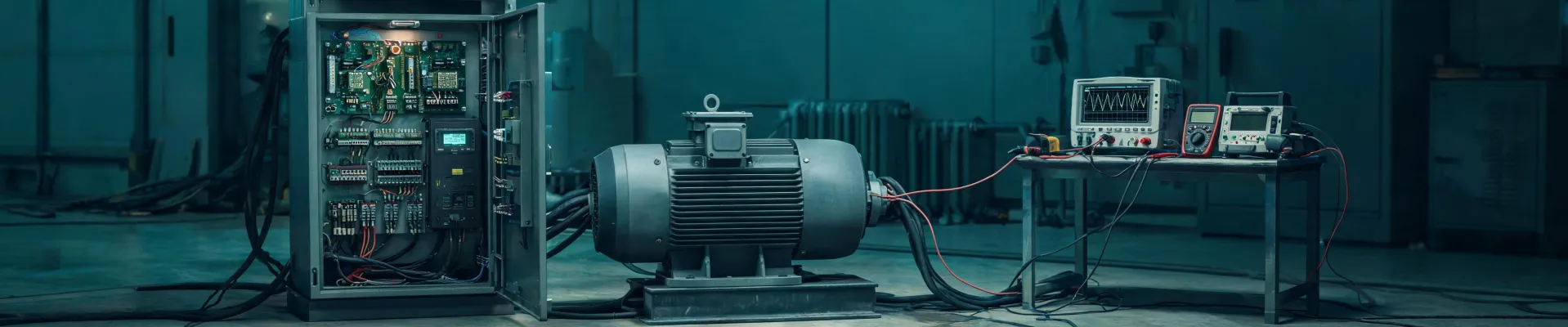
Control panels get skipped too. Take a unit running an mdb8959sfz4 panel—firmware has to match the generator model, and the amp gain on the voltage regulator needs calibration with a multimeter, not a guess. We use a Fluke 87V and follow the service manual procedure, then log the readings. It's 20 minutes of work. Skipping it usually means two service calls and a frustrated customer who paid for a system that "doesn't work right."
If you're evaluating generac generator dealers in iowa, ask three questions before you look at the quote: Do they stock fuel pumps and control boards locally, or do they order them? What's their average winter response time—not their general response time? And do they have a licensed electrician on staff, or do they subcontract the install? The answers tell you more than the bid sheet does.
What most buyers miss
Most buyers focus on kW-per-dollar and completely miss the fuel system, the controls calibration, and the install permits. Those three items account for the majority of cost overruns I've reviewed. The question everyone asks is "what's your best price?" The better question is "what's included in that price, and who signs off on commissioning?"
It's tempting to think a generator is a generator—same model number, same machine. But identical specs from different dealers can land you in very different places six months in, when the fuel pressure drifts and nobody documented a baseline.
Where the low quote still works
None of this means the most expensive option wins automatically. We've had premium-priced vendors ship the wrong control panel revision. The rule isn't "pay more"—it's "know what you're paying for."
If you're buying a portable unit for home backup and you've got a licensed electrician in the family, a low quote can be perfectly fine. The stakes are lower, the install is simpler, and the downtime cost is mostly inconvenience. The math changes entirely for commercial standby systems where every hour offline has a dollar figure attached.
My honest summary: the invoice price is one data point. The fuel pump pressure log, the control panel configuration sheet, and the commissioning report—those are what you actually live with. If a quote is dramatically lower than everyone else's, that's not a deal. That's a red flag until someone shows you the service records that say otherwise.

Pavel Novak
Pavel Novak is a generator and backup-power analyst specializing in standby, portable, diesel, gas, inverter, and commercial generating sets with transfer equipment. For reciprocating-engine sets, he applies ISO 8528-5 dynamic-performance criteria and IEC 60034-1 generator ratings to load steps, starting current, voltage and frequency recovery, cooling, and output; for transfer equipment, he uses IEC 60947-6-1 requirements. He helps facility teams and buyers select systems around emergency loads, runtime, commissioning, fuel strategy, service access, operating cost, and resilience.